
- Food Pro ERP
- Bakery ERP
- Dairy ERP
Food ERP Software for Food Manufacturers
If you make food and sell it, your margin depends on two numbers most software never shows you: what a batch actually cost to make, and how much of your stock is close to its expiry date.
JMJ Food Pro ERP keeps both in view. It is a cloud ERP for food and beverage producers in Kerala and across India, covering recipes, production planning, batch costing, batch and expiry tracking, stores, sales, distribution and GST e-invoicing in one system.
- Bakeries
- Dairies
- Snacks & packaged food
- Spices, flour & masala
- Central kitchens
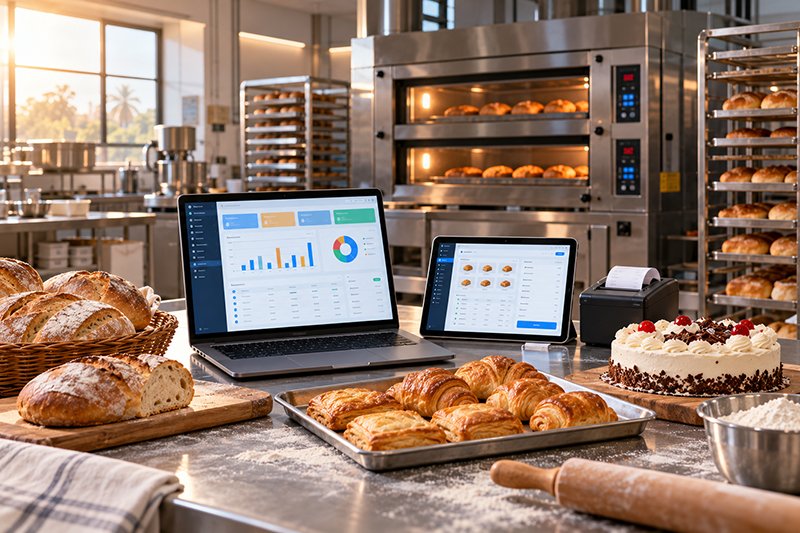
What is JMJ Food Pro ERP?
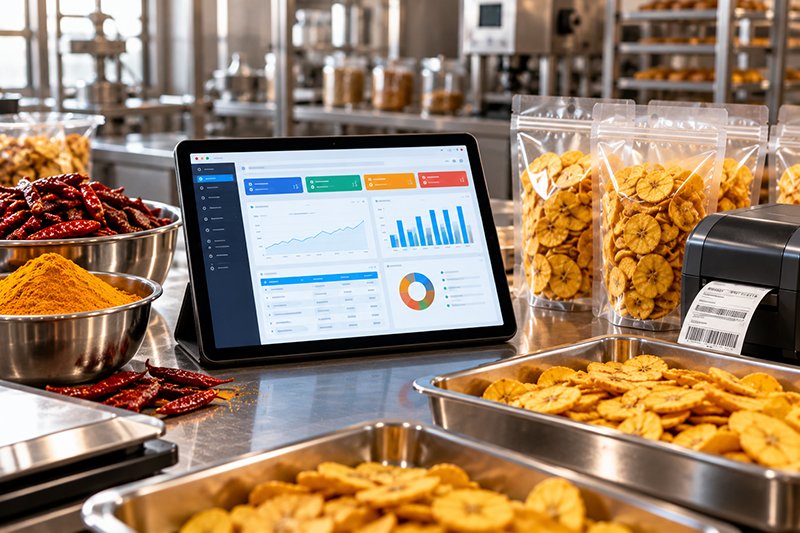
JMJ Food Pro ERP is food manufacturing ERP software that links sales orders to production, production to stores, and every finished batch to its real cost and expiry date.
It understands the things that make food different from other manufacturing: multi-level recipes, perishable raw materials, semi-finished items, batch numbers and expiry dates, and quality checks before stock can be sold. It is the platform behind two industry editions, JMJ Bakery ERP and JMJ Dairy ERP.
- Built for
- Batch food manufacturers
- Editions
- Bakery ERP, Dairy ERP
- Deployment
- Cloud, on subscription
- Mobile
- Owner app and van sales app
- Tax
- GST e-invoice
- Support
- JMJ team in Kochi

Recipes, batches and expiry dates, followed from the store to the customer.
Is your food business leaking profit?
Fluctuating ingredient prices, perishable stock and complex recipes make true costs hard to see on spreadsheets. These are the situations Food Pro ERP was designed around.

Nobody knows the true cost of each batch produced
What it costsPrices are set on old costs, and some products earn far less than anyone thinks.
What the system doesBatch costing from landed cost of raw materials consumed, plus labour and overhead.
Raw materials and finished goods expire on the shelf
What it costsSpoilage and write-offs that are rarely measured.
What the system doesBatch and expiry dates on every item, FEFO issue and picking, short-expiry alerts.
Raw material needs are calculated by hand from sales orders
What it costsProduction stops for a missing ingredient, or cash sits in excess stock.
What the system doesProduction plans from sales orders with raw material requirements and pick-lists generated from recipes.
A quality complaint cannot be traced to its ingredients
What it costsRecalls are slow and broad, and audits take days of searching logbooks.
What the system doesBatch traceability from goods receipt to packed product, forward and backward.
Sales orders, production and warehouse are disconnected
What it costsPromised delivery dates slip and stock figures cannot be trusted.
What the system doesSales orders convert into production plans and job cards, and finished goods flow into sales and distribution.
From sales order to finished batch
Food Pro ERP connects the sales desk, the production floor and the warehouse, so a sales order becomes a plan, the plan pulls ingredients by recipe, and the finished batch carries its cost and expiry date until it is sold.
- Sales orderOrders from distributors, vans and customers.
- Production planDaily or weekly plan with material requirements.
- Material issuePick-lists by recipe, FEFO from stores.
- Production & QCJob cards, work in progress, quality check and release.
- Finished goodsBatch, expiry and actual cost recorded.
- Sales & accountsDistribution, collections and GST e-invoice.
Core features designed for food production
The complete Food Pro ERP feature set. Bakery- and dairy-specific modules are described on their own pages.

Recipe management (BOM)
Define, manage and scale recipes, including multi-level and multi-stage recipes with semi-finished items.
- Material requirements for any batch size, instantly
- Product costs updated when ingredient prices change
- Profit margin visible per product
Why it matters: the recipe is the link between what you buy and what you sell. Getting it into the system is what makes costing and planning possible.
Batch costing
The system tracks the real cost of each batch: the landed cost of raw materials consumed, plus labour and overhead.
Why it matters: when ingredient prices shift, the effect on margin shows straight away instead of at year-end.
Production and batch planning
- Convert confirmed sales orders into a daily or weekly production plan
- Plan from sales orders and demand forecasts
- Quantities and deadlines for the production floor
- Raw material pick-lists generated automatically
- Digital job cards for the floor, with work-in-progress tracking
Batch and expiry tracking (FEFO)
Batch-wise and expiry-date tracking on raw materials and finished goods. The system helps enforce first-expiry, first-out picking.
Why it matters: for cream, milk, oils or fresh produce, issuing what expires first matters more than any report.
Inventory and procurement
- Separate inventories for raw materials, packaging materials, work in progress and finished goods
- Raw material landed cost tracking
- Automated reorder alerts based on stock levels and production forecasts
- Stock across multiple locations
Quality control and traceability
- Quality parameters recorded for batches
- Batch tracking from the raw material goods received note (GRN) to the packed item
- Forward and backward recall
- Traceability records for food safety (FSSAI) audits
Sales and distribution
Sales orders integrate directly with production. Manage distributors, van sales, delivery routes and collections, all linked to central accounts.
Job work for co-packers and private label
Customer-owned materials are tracked separately from your own stock, production is recorded on job cards, and billing covers your value-added services. See Job Work.
Accounts, GST e-invoice and access
Purchases, production and sales post to built-in accounts. GST e-invoices come from the same entries. Access is role-based.
Cloud and mobile
Runs in the cloud on a subscription. Owners check the business on the mobile app; van sales staff take orders and collect payments on it.
Two editions built on Food Pro ERP
The core system is the same for every food business. What changes is the workflow around it. Bakeries and dairies get editions shaped to how they actually operate.

JMJ Bakery ERP
For bakery chains with a central factory, outlets, a café, vans or wholesale customers. Adds outlet allocation, dispatch with QR container labels, a bakery POS, café billing, a van sales app and outlet-level wastage reports.
JMJ Dairy ERP
For private dairies and milk processors. Adds milk procurement with Fat/SNF readings, rate-chart farmer payments, multi-stage production with by-product costing, route sales with crate and can tracking, and cold storage expiry control.
A fit for these food businesses
Food Pro ERP is configured for the demands of:

Bakeries and confectioneries
Multi-level recipes and semi-finished items. See Bakery ERP.
Dairies and ice cream producers
Procurement, by-products and cold chain. See Dairy ERP.
Snack and packaged food manufacturers
Chips, namkeen, mixtures and similar products made in batches.
Spice, flour and masala producers
Raw material lots, packing materials and batch traceability.
Sauces, pickles, jams and RTE
Packaged goods and ready-to-eat products with shelf-life control.
Central kitchens and caterers
Production for restaurant chains or events from standard recipes.
Private label and co-packers
Customer-owned material and job work billing.
Billing and accounting software stops being enough
Signs you have outgrown spreadsheets: the costing sheet is reworked by hand whenever flour, oil or milk prices move; someone checks expiry dates by walking through the store; tomorrow's production is decided by whoever is on shift; and a complaint about a batch cannot be traced to its raw material lot.
Billing software does one job well: it records what you sold. A food business has a harder job behind the counter.
Say the price of cashew goes up next month. Your billing software records the new purchase price. What it will not tell you is that three of your products now earn less than you think, or which batch on the shelf was made with the older, cheaper stock.
That gap between buying, making and selling is what a food ERP is for. Accounting packages such as Tally remain good at accounts; they are not built to plan production, manage recipes, cost each batch or enforce FEFO.
What to evaluate in any food ERP
General buyer guidance for food manufacturers comparing systems.
- Multi-level recipesCan it handle semi-finished items and scale to batch size?
- Costing from actual consumptionIs batch cost calculated from what was used, including labour and overhead?
- Expiry rulesIs FEFO enforced at issue and picking, not just reported?
- TraceabilityCan you trace a batch both ways in minutes?
- Quality holdCan a batch be held until quality checks pass?
- Sales and distributionDo orders, vans and collections live in the same system as production?
- Accounts and GSTAre e-invoices generated without re-entry?
- Local supportWho sets it up, trains your staff and answers the phone?
Getting Food Pro ERP running
Most of the work happens before go-live, and most of it is listening.

- Process reviewHow production, stores and sales work today.
- Set upProducts, recipes, locations and users.
- Data migrationExisting data moved and checked with you.
- TrainingEach team on its own part, on-site or remote.
- Go-live and supportClose support at go-live, then updates and changes.
About JMJ Software Solutions
JMJ Software Solutions has been building business software since 2001, with more than 250 projects delivered for over 100 customers from offices in Kochi and Bangalore.
Food Pro ERP is in use at a multi-outlet bakery chain and at a private dairy. For a food business in Kerala, the people who set the system up are a short drive away in Kochi.
The system can be customised to the way you work, rather than the other way round. See ERP implementation and customisation.
What is food ERP software?
Food ERP software is a business system built for food producers. It connects recipes, production planning, batch and expiry tracking, inventory, sales and accounts, and it calculates what each production batch actually cost. General billing or accounting software does not handle recipes, batches or expiry.
Who is JMJ Food Pro ERP for?
Food manufacturers that produce in batches: bakeries and confectioneries, dairies and ice cream producers, snack and packaged food makers, spice, flour and masala producers, ready-to-eat producers, central kitchens, catering companies, and private label or co-packing units.
How is Food Pro ERP different from Bakery ERP and Dairy ERP?
Food Pro ERP is the platform. Bakery ERP and Dairy ERP are editions of it for those two industries. The bakery edition adds outlet allocation, bakery POS, café and van sales. The dairy edition adds milk procurement, Fat/SNF farmer payments, by-product costing and crate tracking.
Is Tally enough for a food manufacturing business?
For accounting, Tally does the job. It is not built to manage recipes, plan production, cost each batch or enforce FEFO, so growing food manufacturers usually need an ERP for operations. Food Pro ERP includes accounts, so purchases, production and sales post to the same books.
Can Food Pro ERP trace a batch back to its raw materials?
Yes. Batches are tracked from the goods received note for each raw material through production to the packed product, so a batch can be traced backward to its ingredients or forward to the customers who received it.
Does it enforce first-expiry, first-out (FEFO)?
Yes. Raw materials, packaging and finished goods carry batch and expiry dates, and the system directs staff to issue or pick the stock that expires first.
Does Food Pro ERP support GST e-invoicing?
Yes. GST e-invoices are generated from the same sales entries, so invoices are not typed twice.
Is it cloud-based, and is there a mobile app?
Yes to both. Food Pro ERP runs in the cloud on a subscription. Owners use the mobile app to check the business, and van sales staff use it for orders and collections.
Can co-packers and private label manufacturers use it?
Yes. Food Pro ERP includes job work handling: customer-owned material is tracked separately, production is recorded on job cards, and billing covers your value-added services.
How long does implementation take?
It depends on the number of locations, products, recipes and records to migrate. The JMJ team gives a timeline after the first process review.
Related products and pages
Other JMJ products and pages that work alongside this one.
Bring one of your recipes to the demo
In about 30 minutes, the JMJ team takes one of your products from purchase to production to sale, and shows its cost and expiry date at every step.
Prefer to talk? Call +91 7902 889 777, email info@jmjsoft.com or message us on WhatsApp.